How LLMs are the Spinning Jenny of information industry

A friend linked to a post by an experienced programmer about why he is not using AI anymore.

Something about how people debate AI has bothered me for a while. There seems to be artificial divisions. Some people think that the division is in knowledge and understanding: people who can use AI are pro it, people who object just don’t understand it or have not really tried it. Or people who use AI don’t just understand how many mistakes it can make and how biased it is, or how immoral, while people who do not use it are the ones who understand the issues.

The linked post is by someone who has tried, and who does know that with some measures efficiency does increase, and still objects. And the objections are quite familiar from a completely other context.

The term Luddite is often used these days to refer to a person who objects to new technologies out of backward thinking or unsubstantiated fear. The original Luddites, however, did not object to technology. They worried about its impact on products, professionals, and society.

Specifically, they worried that the use of machines might lead to mass unemployment to the people while the rich owners of them got richer still. They worried that while the cloth industry machines could produce a lot of material in a short time, the material would be of inferior quality, leading to the need to buy new things when the old ones broke, and thus to waste. They worried about physical safety in the factories, but also about the mind-numbing conditions of the factories, where the individual worker was disconnected from the product. They lamented that professional skill in making quality items would be replaced by unskilled labor mass-producing lower quality work.

Looking at the issues that current day’s fast fashion has given us, I don’t think they were wrong.

LLMs are the Spinning Jenny of software industry (and other forms of information industries). A development has started, where it is easy to mass produce great amounts of sort of functional code, but the code produced is of lesser quality. It is not easily maintainable. It is not easily repairable. Producing it is mind-numbing and bad for one’s mental health. It reduces the skill needed by the programmer, and eventually it is lost. It concentrates profit in the hands of a few rich individuals getting richer still, instead of spreading it to those who produce it.

The programmer Brett C. I quoted in the beginning of the post is no more anti-technology than the Luddites were, as his homepage proves. He seems to love programming. He uses it for both work and play. What he does not like is mass-produced code and the effects the mass production has on the industry, on the product, on the people involved. And he is not alone.

Maybe in a decade or two we will have artisanal programmers and doctors whose services you can buy to self-care for yourself after you have spent a mind-numbing week at a program or health factory. Or maybe this time, we will have a successful neo-Luddite movement.

I, for one, conscientiously object to mass-produced science and mass-produced healthcare services. I believe we can do better, and in these fields, it is very seldom that faster is better.
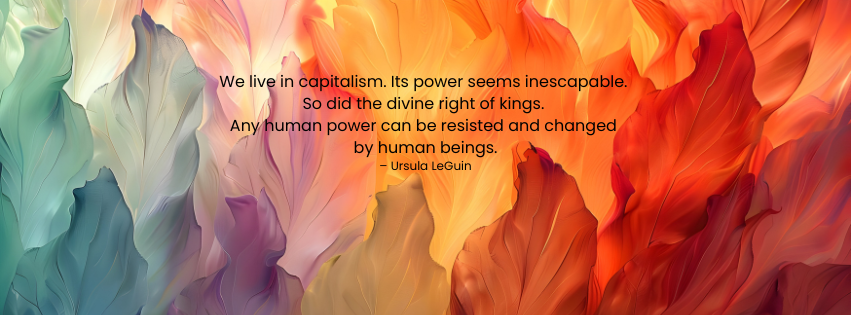
Dr Wessman’s First Ten Truths

This post was originally a Mastodon thread. In it, based on some discussions ongoing in different contexts, I laid down things I considered truths. People seemed to like it, and as my Mastodon posts are ephemeral, I will document them here now. So: welcome to my not-TED talk, aka Dr Wessman’s First Ten Truths.

Yes, the name of this post is intended as ironical. Sheesh.

Relevant background of mine: I am a child psychiatrist working in children and youth community level mental health services. I hold a PhD in data analysis. I’ve dabbled in practical epidemiology. I am a parent. My values can be described as left liberal. I am not a psychotherapist.

One. Humans did not evolve in conditions where being easily content was a survival trait. It was better to get a little restless and start looking for things to improve and food to store than to sit around feeling nice. Your mind does not exist to make you feel good. It has evolved to help you survive in extreme conditions. Calm, content, peace of mind, etc are not the default normal state of a human being. Periodically rising restlessness, that pushes us to Do Something is what is “normal”.

Two. In fact, if you always were 100% happy and content, you would die of thirst. Discontent and unhappiness caused by the thirst is what gets you off the sofa and to get a glass of water. When things are wrong and you can and need to do something about that, it is appropriate to feel bad – anxious, angry, depressed, in pain, whatever. The goal is not “to feel good” all the time.

Three. So-called “negative” emotions should function like an instrument panel. It has gauges and warning lights to tell you that something might be wrong. The gauge on red or the light is not a problem as such. Getting rid of warnings altogether would be dangerous (see previous point). But it is also not always an emergency. It can warn you about a thing you already have a plan to deal with. It might warn you about something you cannot fix and just have to live through. Or it can be broken.

Four. There is no “real you”. It is normal and healthy that you are different in different situations and that sometimes you have to struggle to present in a socially fitting way. All of the versions of you are “real” even if some are more comfortable than others. Feeling awkward in a social situation is not a sign that something is wrong. Awkwardness is a feature of complex situations. It tells you something new, interesting or important is happening or about to happen.

Five. Because there is no “real you” and we all are formed in social contexts, to some extent everybody “masks”. It is as such not a sign that something is wrong. However, people differ a lot on how much work this all is. Everybody has the right to try and arrange their life so that they do not need to struggle all the time. No one has the right to expect to feel comfortable all the time. This means that people with more flexibility need to adjust to others more to make room for everyone.

Six. You might have noticed that I have refrained from using diagnostic words in this post. I will continue to do so. Medical diagnoses have their uses in medical contexts. Outside of it, categorization of humans into medical groups almost always does more harm than good. Categorical groups are strict and narrow and fail to capture the true variety and the true similarities of human beings. It makes sense to decide how to treat you based on your diagnosis only if you are my patient.

Seven. Humans do not neatly divide into two distinct groups of neurotypical and neurodiverse. At least 85% of people have some “neurodiverse” feature (I am almost face blind and a couple of other things myself). Around 50% of people have several. The ends of the spectrum are rare. Neither neurotypical nor neurospicy people are all the same, and most people are somewhere in between anyway. Binary division works here as badly as it does with gender.

Eight. Just like the socially acceptable you that you struggle to present is real, the you who does bad shit is real. It makes no sense to say of someone who acts violent or racist or sexist or mean, “they are not really like that”. If they do those things they are a person who does those things. They might be a person who does not want to, and wishes to do better. That’s great and we should help them. It does not make the things they do less real, though.

Nine. We really need to go back a little on what “nursing” and “healing” mean. In many mental health problems, treatments alone do not heal. Mental growth, regular healthy life, and supportive social contexts do. Treatments – and medicines and therapies have this in common – are often necessary, but to remove obstacles and increase flexibility, not to do the work. Mental health problem prevention is mostly social policy and the work of politicians, not doctors and nurses.

Ten. In the end, none of this matters. There is no “meaning of life”. Values are a human social construct, and the universe does not give a damn. Only people do. That means that you are 100% free to choose what matters to you. If you are a good person who wants to do good – and the vast majority of us are – you do not have to justify it. Because nothing matters, it does not matter if it is naive. Or hopeless. Or idealistic. Or meaningless. Or cringe. You really can be good just for the hell of it.

    Thank you for reading! Despite the name of this post, there are no further truths for now, but there might be! Or not.

    Top 3 new discoveries this past year

    1. Cashew paste. N dl cashew nuts, N/2 dl of cold water, some boiling water. Soak cashews in boiling water for 15 minutes. Drain. Add the cold water, blend cashews into paste. Goes with everything from oatmeal to chili, keeps in the fridge for a small forever. You are welcome.
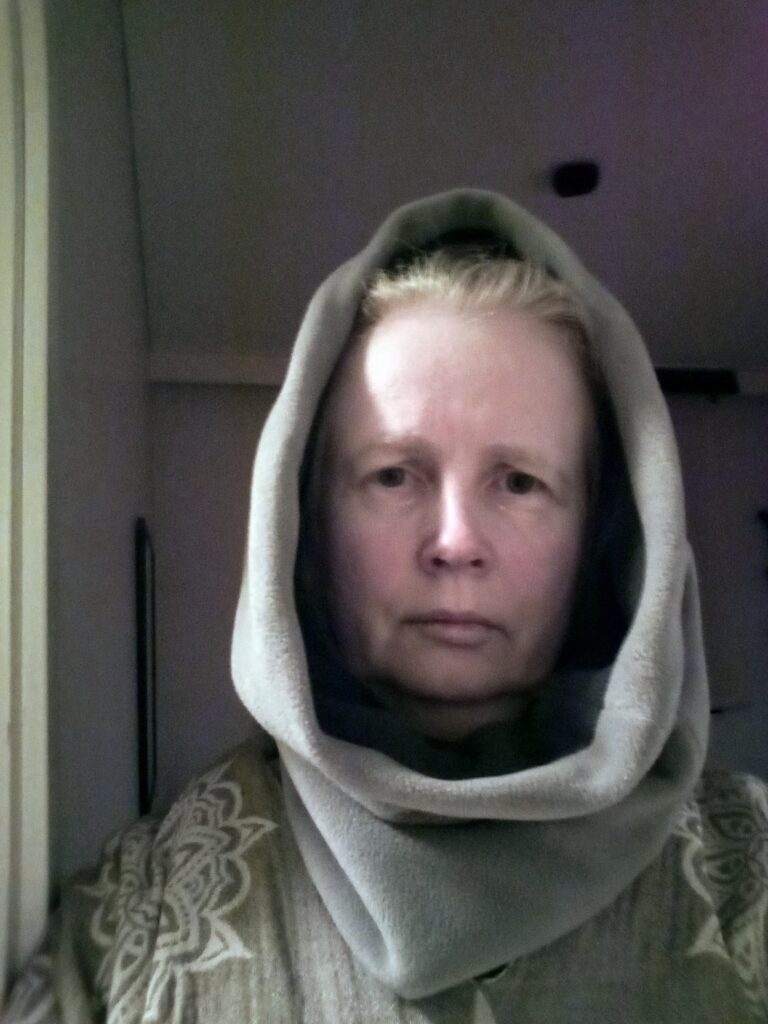
    2. A big tube scarf of double fleece beats used as a hood beats wool caps / beanies for warmth. If you pull your winter coat hood over it is basically storm proof for both your head and your neck. It also helps you keep warm when you are chilly indoors better than adding another layer of wool sweater does. But it’s gotta be big. The skin tight ones don’t work the same. Please see attached picture of tired lady for reference. I have no idea if wool would work the same way but it’d probably be too scratchy for me.
    3. MDF book nook kits. It’s like scale models straight from 1980s except material technique has taken some serious steps forward since, you can use water soluble glue instead of ending up with everything in the disaster zone superglued together, and everyone thinks themes other than military count as cool. As an added bonus, you do not need a separate space to display them, I can just put them on the bookshelves we have anyway.

      Also yes, topics on this blog will be totally random. I have truly gone back in time with this thing. I will probably add things from my past web appearances in a slow, non-coherent manner too.

      Check the sidebar on the left to find me on Goodreads, Bluesky, and Mastodon, and to pick up the RSS URL to this thing.

    Hello world!

    I’m leaving Facebook as announced. This branch of social media development was a mistake and we should probably rollback to something around the golden age of group chats, blogs, and aggregators. I doubt that’ll actually happen, but from now on my religion forbids the usage of ‘social’ media sites that do not allow me full control over whose posts I see.

    There’s nothing to see here yet. Time will show if there will be.


    Ilmoitin n. kuukausi sitten aikovani lähteä Facebookista ja mahdollisesti muutamilta muiltakin niin sanotuilta sosiaalisen median alustoilta tässä vuoden vaihteessa. Syy siihen on se, että “social media isn’t, anymore”. Kun sosiaalinen media keksittiin, sen perimmäinen tarkoitus oli nimenomaan olla sosiaalista: tuntemieni ihmisten minulle kuratoimaa sisältöä ja tietoa siitä, mitä heille kuuluu.

    Pikkuhiljaa valta siitä, mitä minulle näytetään on siirtynyt minulta alustalle. Nyt ihan viimeisten vuosien aikana enenevästi niin sanotun “sosiaalisen median” olemassaolon oikeutus ovat tyrkkyalgoritmit, jotka yrittävät saada meidät seuraamaan alustaa niin kauan, että saavat tyrkytettyä meille mahdollisimman paljon sisältöä, jonka tyrkyttämisestä joku maksaa. Ja generatiivinen AI ei millään lailla parantanut tilannetta.

    Täällä ei ole vielä mitään nähtävää. Aika näyttää onko koskaan.